Gypsum board is behind more walls and ceilings in Dubai apartments than most people realize. That matters the moment you want to hang a TV, notice a crack forming, or spot a water stain on the ceiling. Gypsum board reacts differently to weight, moisture, and repairs than solid concrete. Knowing the difference saves you from a costly mistake.
This guide covers what gypsum board actually is, the problems that show up most in Dubai homes, how to safely mount a TV or shelf on it, and how false ceilings work.
In This Guide
- ▶ What Is Gypsum Board and Why Dubai Uses It So Much
- ▶ Common Gypsum Wall Problems
- ▶ Can You Mount a TV on a Gypsum Wall?
- ▶ False Ceilings: Gypsum’s Other Major Use
- ▶ Gypsum Ceiling Problems
- ▶ How Gypsum Repairs Are Done
- ▶ Gypsum Repair Cost in Dubai
- ▶ Frequently Asked Questions
What Is Gypsum Board and Why Dubai Uses It So Much
Gypsum board is also called drywall or plasterboard. It’s a panel made from a gypsum plaster core, sandwiched between two layers of paper. It gets mounted on a steel or timber frame to build a wall, or fixed overhead to build a ceiling.
Dubai’s construction industry uses it a lot. It goes up faster than block work. It makes very little dust during installation. And it costs a lot less than a brick and mortar wall.
Most internal walls inside Dubai apartments are gypsum board, not concrete. Concrete is usually kept for the building’s external walls and structural columns. Almost everything dividing rooms inside your apartment sits on a metal stud frame.
Common Gypsum Wall Problems
Gypsum behaves differently to concrete. A few issues show up again and again in Dubai homes that would rarely happen on a solid wall.
Cracks along joints. Gypsum boards are joined with tape and joint compound. Over time, especially with building settlement or AC temperature swings, these joints can crack. Usually a thin, straight line where two boards meet.
Holes from old fixtures. Old picture hooks. Shelf brackets. A TV mount that got removed. All of these leave holes behind. Gypsum holes are easy to patch. But they’re just as easy to make worse if filled the wrong way.
Nail or screw pops. A small raised bump on the wall where a screw or nail head has pushed slightly out. Usually shows up once paint highlights the texture change.
Paint peeling or bubbling. Gypsum absorbs moisture differently than concrete. Paint without the right primer can peel or bubble sooner than expected, especially near bathrooms or kitchens where humidity is higher.
Soft or spongy patches. If a gypsum wall feels soft when you press it, moisture has likely gotten into the board. Often from a hidden leak. That section usually needs cutting out and replacing rather than just patching.
Can You Mount a TV on a Gypsum Wall?
Yes. But only with the right anchoring. This is where most DIY attempts go wrong. Gypsum board on its own can’t safely hold a TV bracket. The weight it can carry depends entirely on the anchor used.
| Anchor Type | Approximate Weight Capacity |
|---|---|
| No anchor, screw directly into gypsum | 5 to 10 kg maximum |
| Standard plastic wall plugs | 5 to 15 kg (not safe for most TVs) |
| Molly bolts | 15 to 25 kg per anchor |
| Toggle bolts | 30 to 50 kg per anchor |
| Heavy duty snap toggles | 40 to 60 kg per anchor |
These numbers assume standard 12.5mm gypsum board. A typical 65 inch TV weighs around 25 to 30 kg. Four toggle bolts give you roughly 120 to 200 kg of combined capacity. That’s a comfortable safety margin.
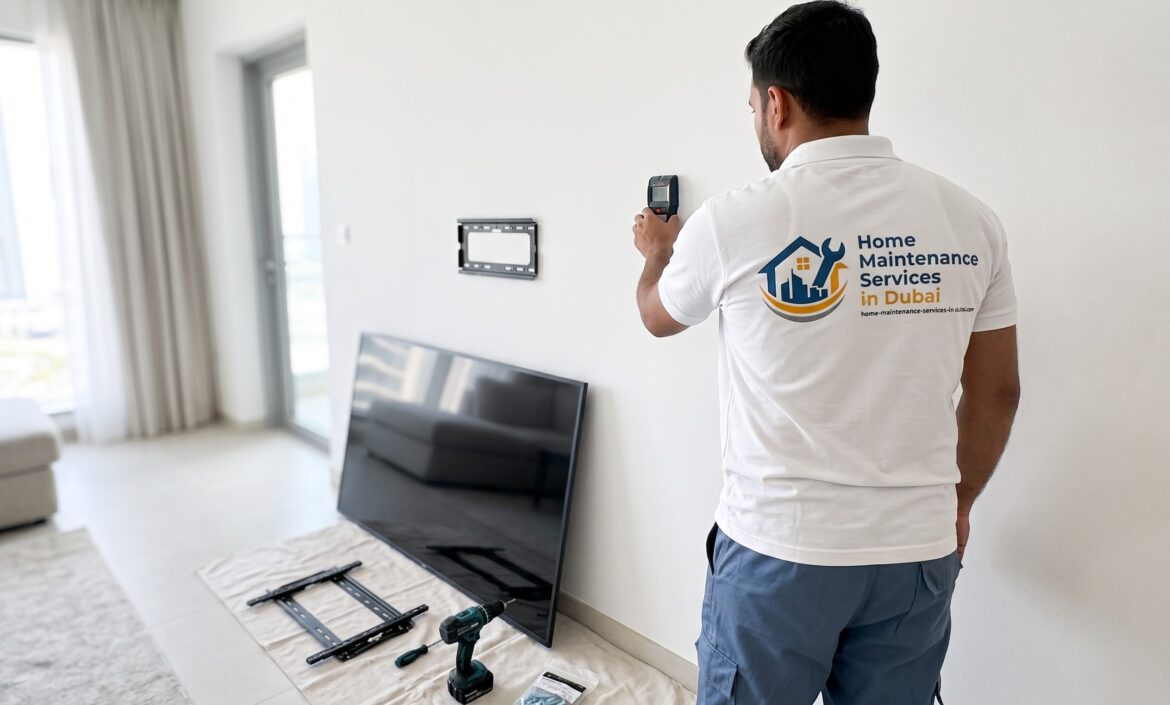
Most Dubai towers, especially in Marina and Downtown, have metal studs behind the gypsum. Drilling into a stud gives roughly ten times the strength of anchoring into gypsum alone. Find the studs before you drill. A stud finder also helps you avoid hidden AC pipes and wiring behind the wall.
If you’re renting, here’s some peace of mind. Dubai landlords generally treat properly patched TV mounting holes as normal wear and tear, not damage. As long as the holes are filled and touched up with matching paint before you move out.
False Ceilings: Gypsum’s Other Major Use
Gypsum board isn’t just for walls. It’s also the standard material for false ceilings across Dubai homes and offices. A false ceiling is a second ceiling built below the original structural slab, and it does a lot at once.
It hides AC ducting, wiring, and plumbing that would otherwise be visible. It lets recessed lighting sit flush in the ceiling. And it can be shaped into stepped or decorative designs that a flat concrete ceiling simply can’t do.
False ceilings show up most in living rooms and hallways, where the lighting flexibility matters most. But you’ll also find them in bedrooms and kitchens, usually just to hide ductwork.
Gypsum Ceiling Problems
Gypsum ceilings face a slightly different set of problems, mostly tied to what sits above them.
Water stains, yellow or brown patches, usually point to AC condensation or a plumbing issue in the unit above. The stain is just a symptom. Fix the leak first, or the stain will keep coming back after you repaint.
Sagging in one section usually means the frame has come loose from the slab above. That needs re-securing, not just a surface patch.
Cracks along the edge where the ceiling meets the wall are common, and usually just cosmetic. Caused by minor building movement, not a structural issue.
How Gypsum Repairs Are Done
For small holes and cracks, the process is simple. Loose material gets cleared away. The hole or crack gets filled with gypsum based filler. Once it’s dry, usually within two to four hours, it gets sanded smooth, blended into the wall texture, then primed and painted to match.
For bigger damage, like a water damaged section that’s gone soft, the affected board gets cut out along the nearest stud lines and replaced with new gypsum board. Then it’s taped, filled, sanded, and finished the same way as a small patch. Ceiling repairs follow the same steps, but the frame gets checked first before any surface work starts.
Gypsum Repair Cost in Dubai
| Service | Price Range |
|---|---|
| Small hole or crack repair (per hole) | AED 50 to 100 |
| Wall restoration before move out (per wall) | AED 150 to 250 |
| TV mounting on gypsum with reinforced anchors | AED 200 to 500 |
| Section replacement (water damaged board) | AED 300 to 700 |
| Ceiling patch and repaint | AED 200 to 500 |
Send a photo of the damaged area, or the wall where you want a TV or shelf mounted. You’ll get the right approach and a fixed price before anything starts.
Frequently Asked Questions
How do I know if my wall is gypsum board or concrete?
Knock on it. Gypsum sounds hollow. Concrete sounds solid and dense. Internal walls in most Dubai apartments are gypsum. External walls and structural columns are concrete.
Is it safe to mount a heavy TV on a gypsum wall?
Yes, with the right anchors. Toggle bolts or heavy duty snap toggles give enough combined weight capacity for most TVs when you use several together. Finding a metal stud behind the gypsum for at least one anchor point adds real extra strength.
Why is my gypsum wall cracking?
Small cracks along board joints usually come from minor building settlement or AC related temperature changes. Mostly cosmetic, and easy to patch. If the same spot keeps cracking, the frame behind it might need a check.
What causes water stains on a gypsum ceiling?
Usually an AC condensation leak, or a plumbing issue in the unit above. The stain is just a symptom. Find and fix the source before repainting, or it comes back.
Will my landlord deduct my deposit for TV mounting holes?
Generally no. As long as the holes are properly filled and touched up with matching paint before you move out. Dubai landlords commonly treat patched holes as normal wear and tear, not tenant damage.
Get Your Gypsum Wall or Ceiling Fixed Properly
Wall crack. A TV that needs mounting safely. A ceiling stain that keeps coming back. Whatever it is, our handyman team handles gypsum work across Dubai.
💬 WhatsApp Us — we reply within 15 to 30 minutes, any time of day.
More From Our Team
- Partition room installation Dubai
- How to fix uneven paint on walls
- Move out painting: what landlords check
- What can a carpenter in Dubai build for you
- How home maintenance works in Dubai
BHMS provides handyman services, painting, partition making, and TV installation for apartments, villas, and offices across Dubai.


